

Energized by eclipse
Mt. Lebanon experiences once-in-a-lifetime event
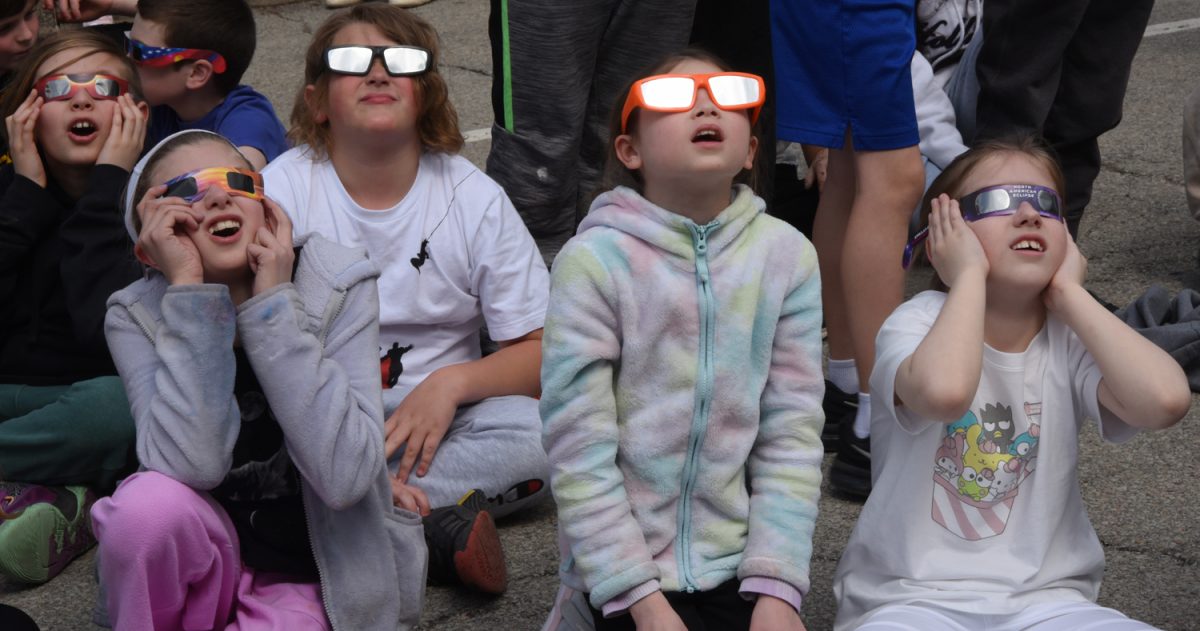
Connie Mathews remembers viewing her first solar eclipse. She was living in Mexico City and driving to see the Popocatépetl volcano on July 11, 1991, when the moon passed between the earth and the sun, totally obscuring its view.
“I got to see the roosters crowing and animals responding. The people in the country were actually hiding away in their houses because folks were afraid of what was happening. We were in a very remote region,” she noted. “It was an incredible experience.”
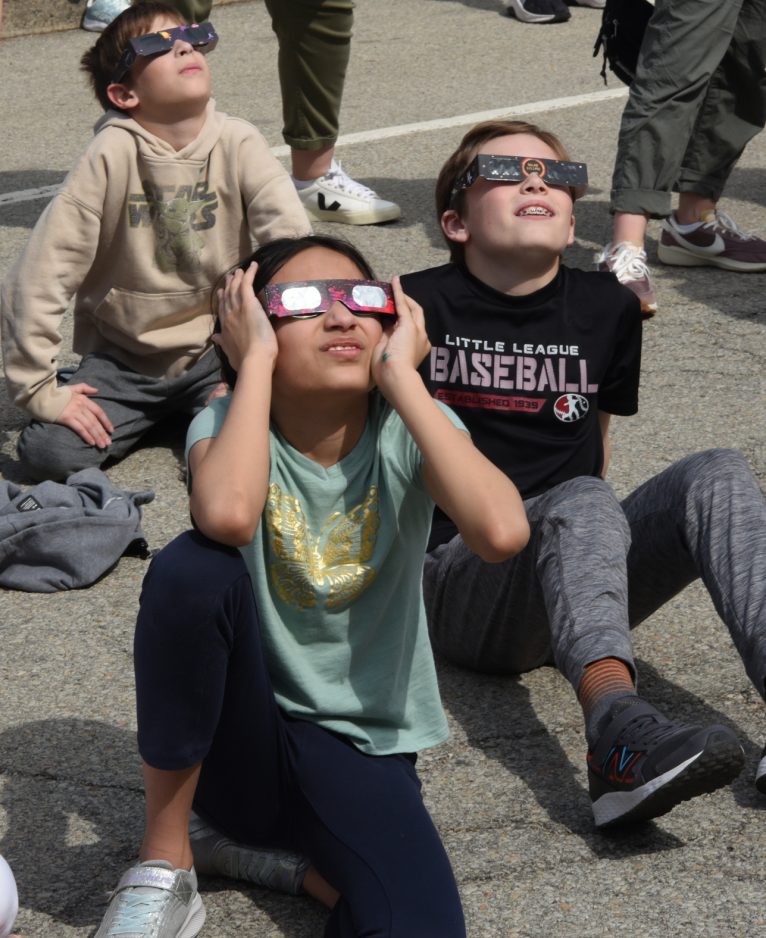
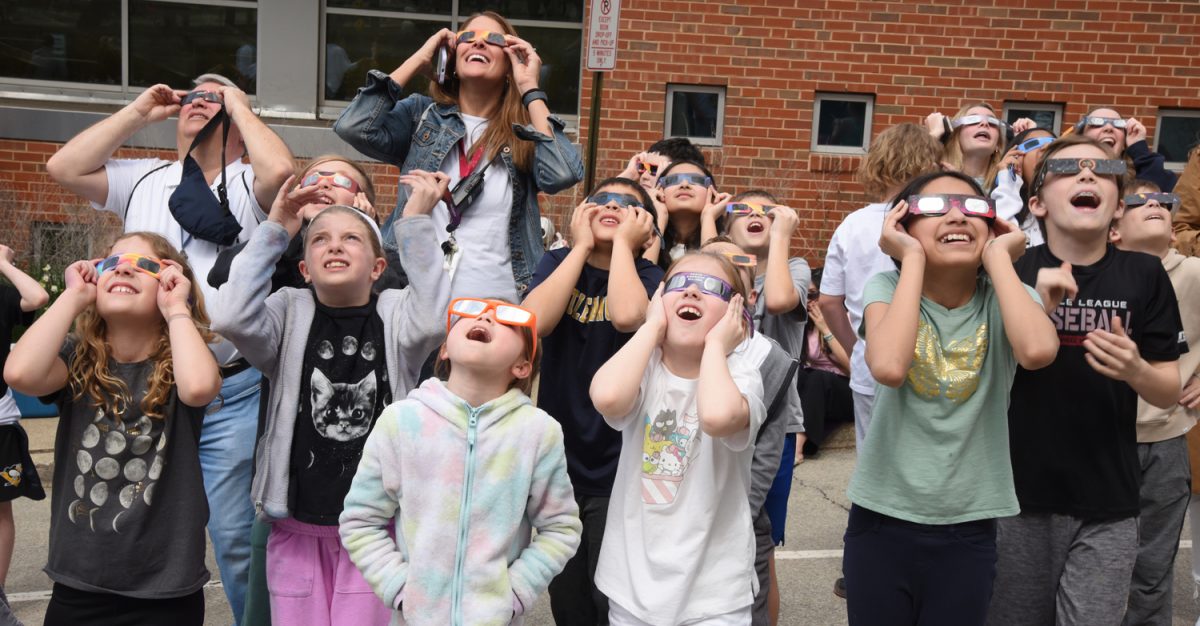
Although at 97% totality, the solar eclipse that occurred April 8 impressed Mathews even more. That is because the senior children’s librarian, in conjunction with the Citizen Science Lab, helped host a watch party attended by an estimated 270 guests at the Mt. Lebanon Public Library.
“This was so much fun. The energy was so good, and I was so happy the clouds cooperated. We knew the sun would,” she said.
Around 2 p.m. when the watch party started, the dark clouds occluding the sun began to dissipate to the cheers of the gathering crowd. While waiting for totality to occur at 3:17 p.m., families, children and friends occupied themselves by visiting several stations set up by the Science Lab to educate and inform.
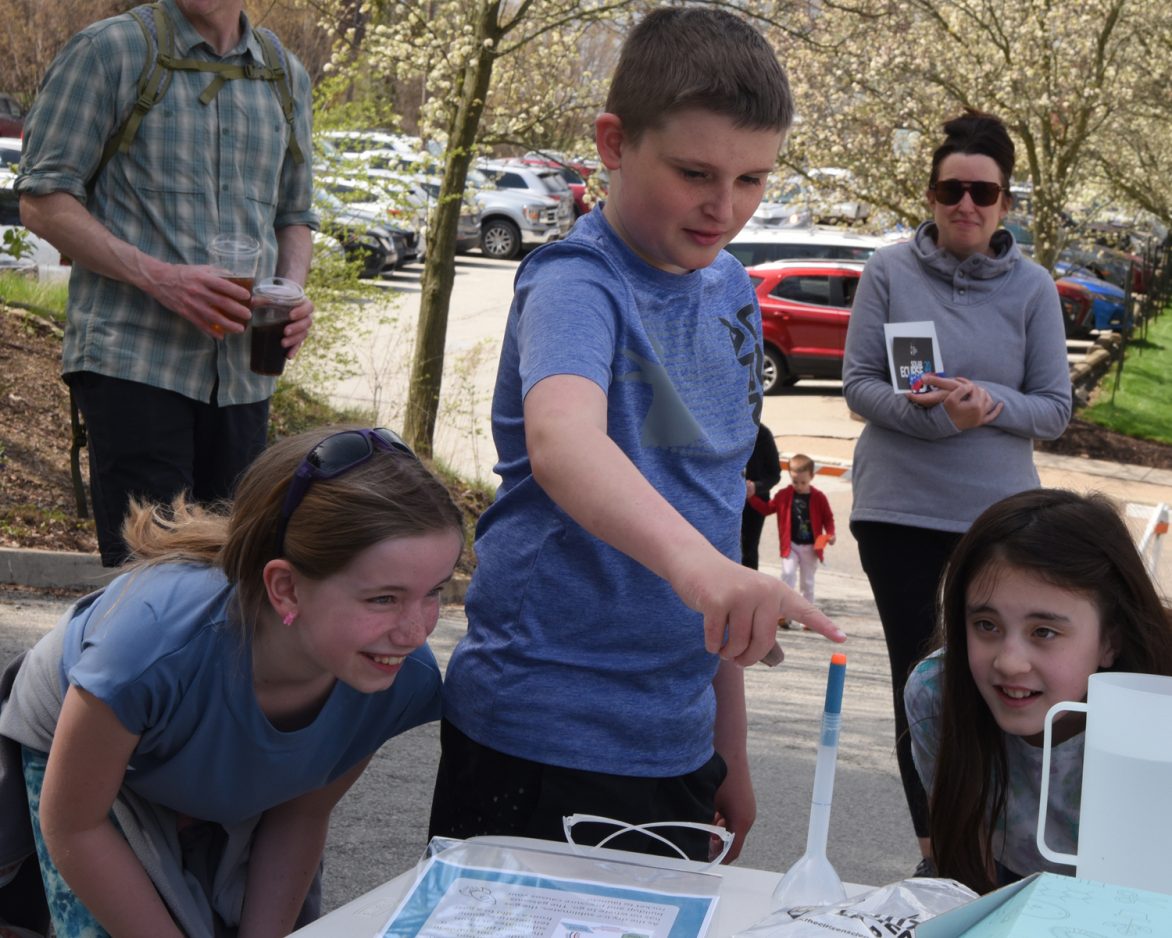
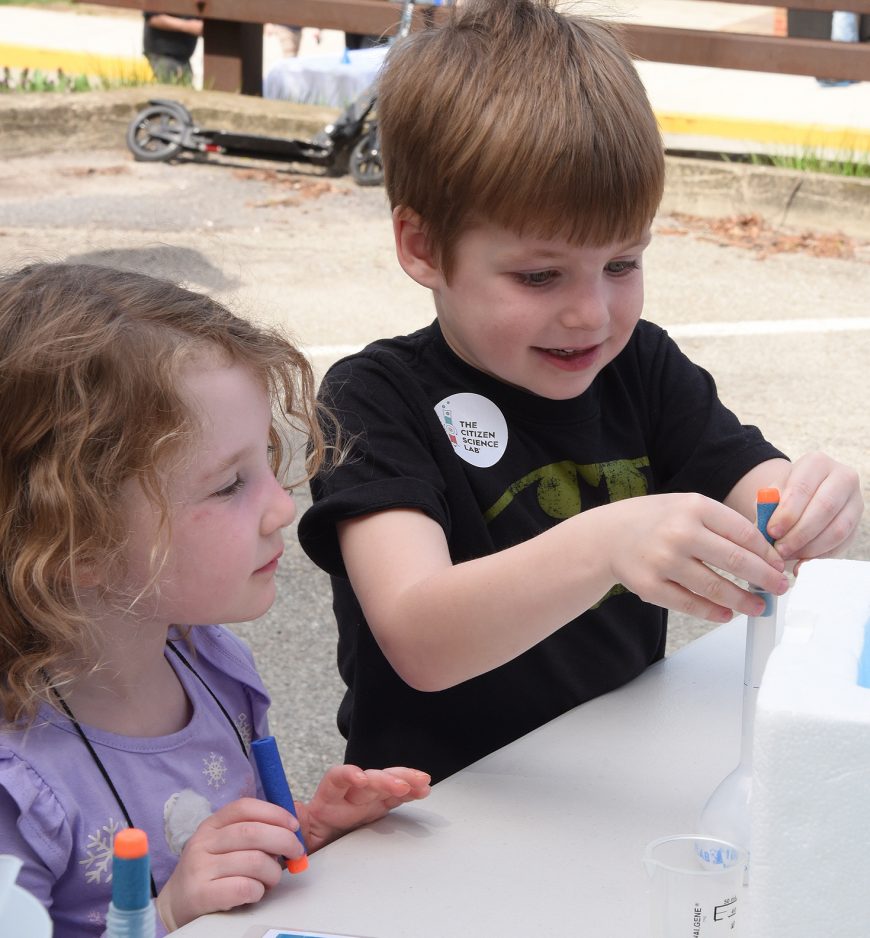
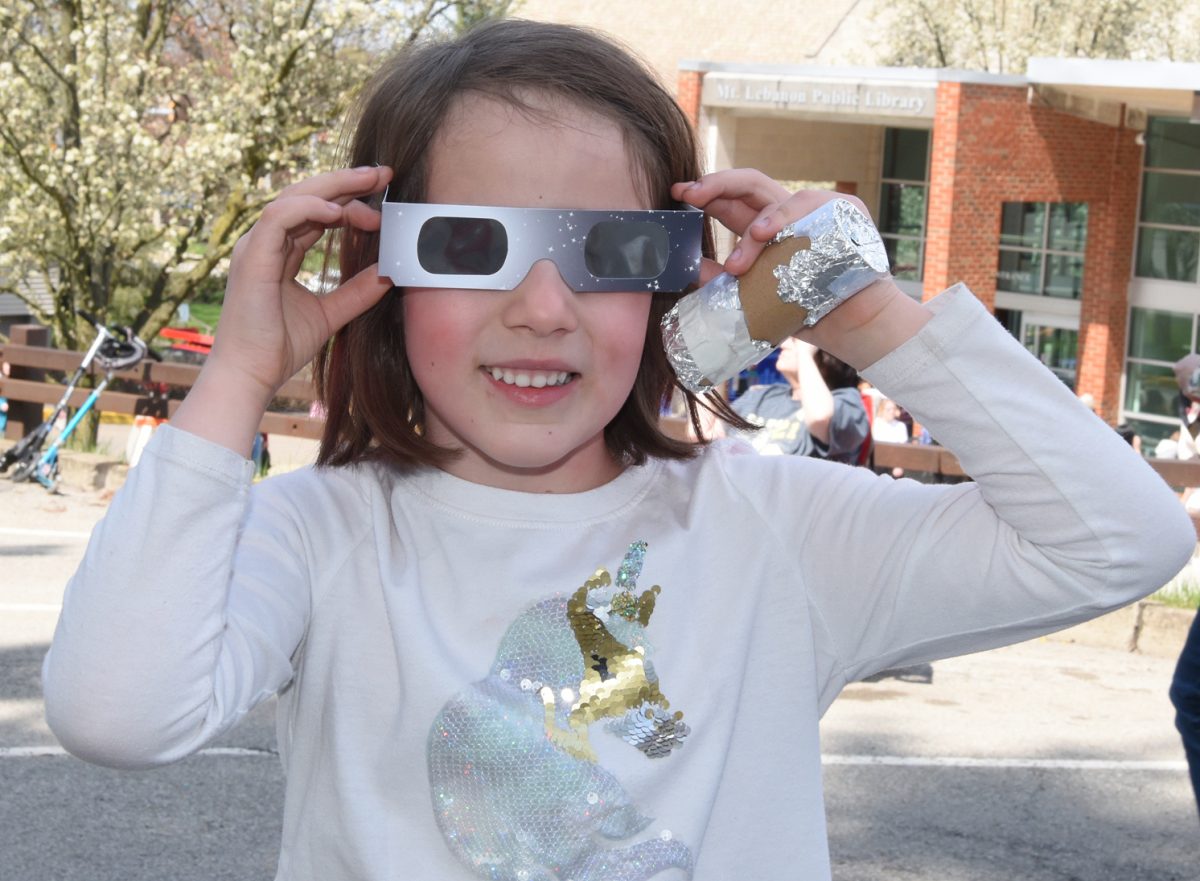
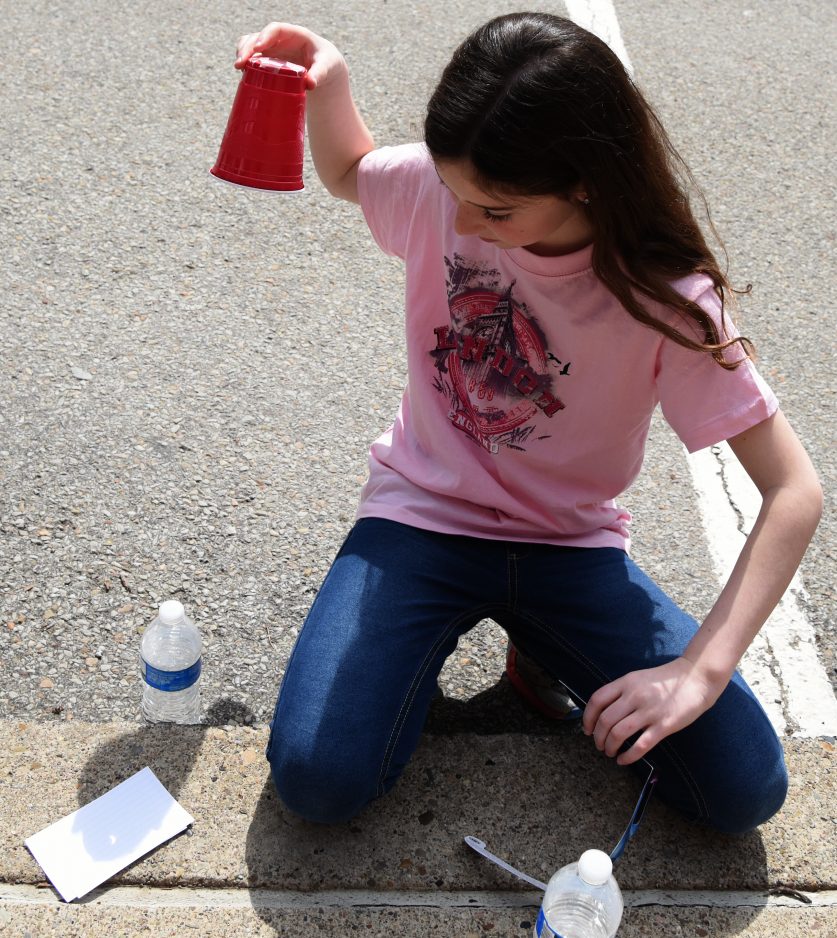
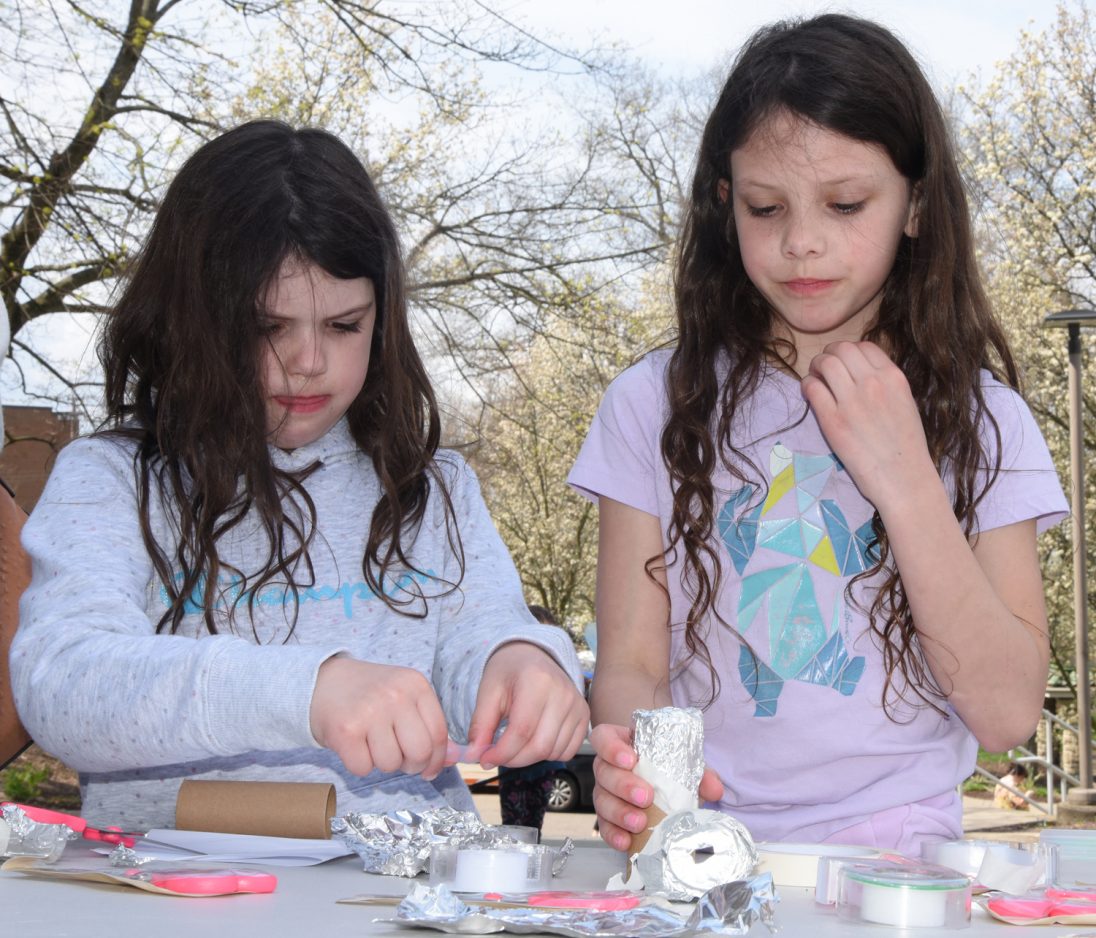
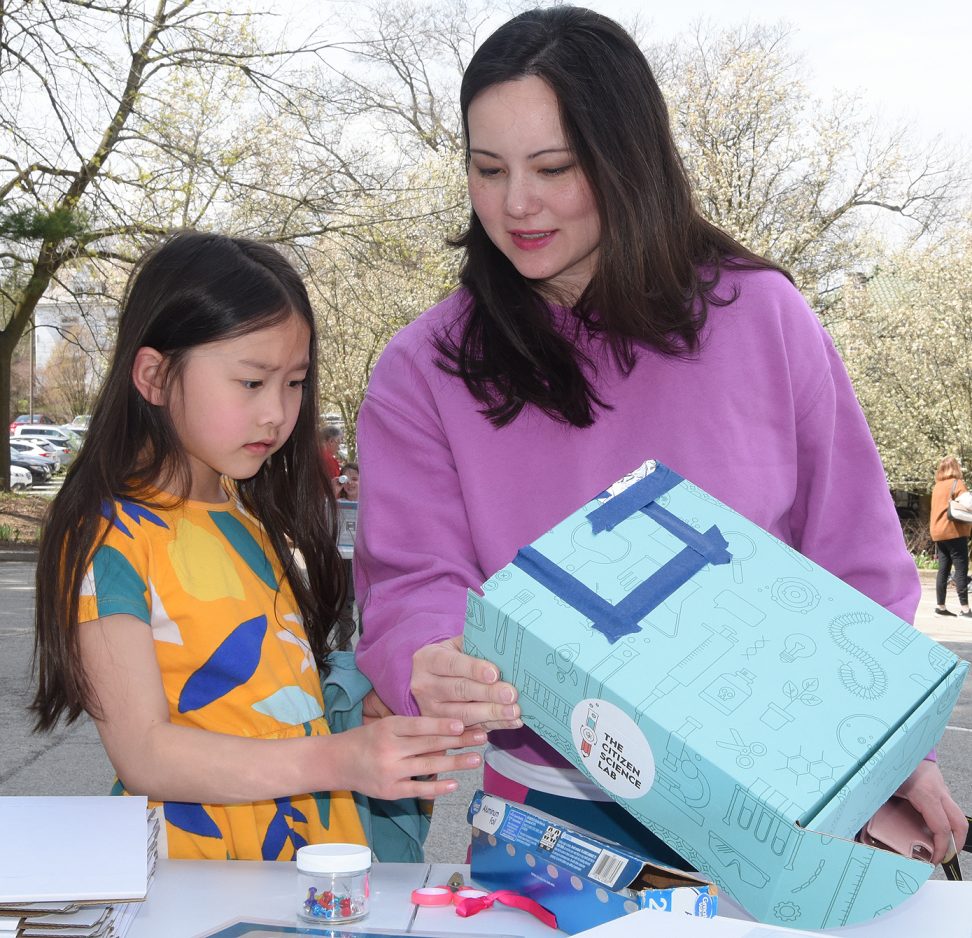
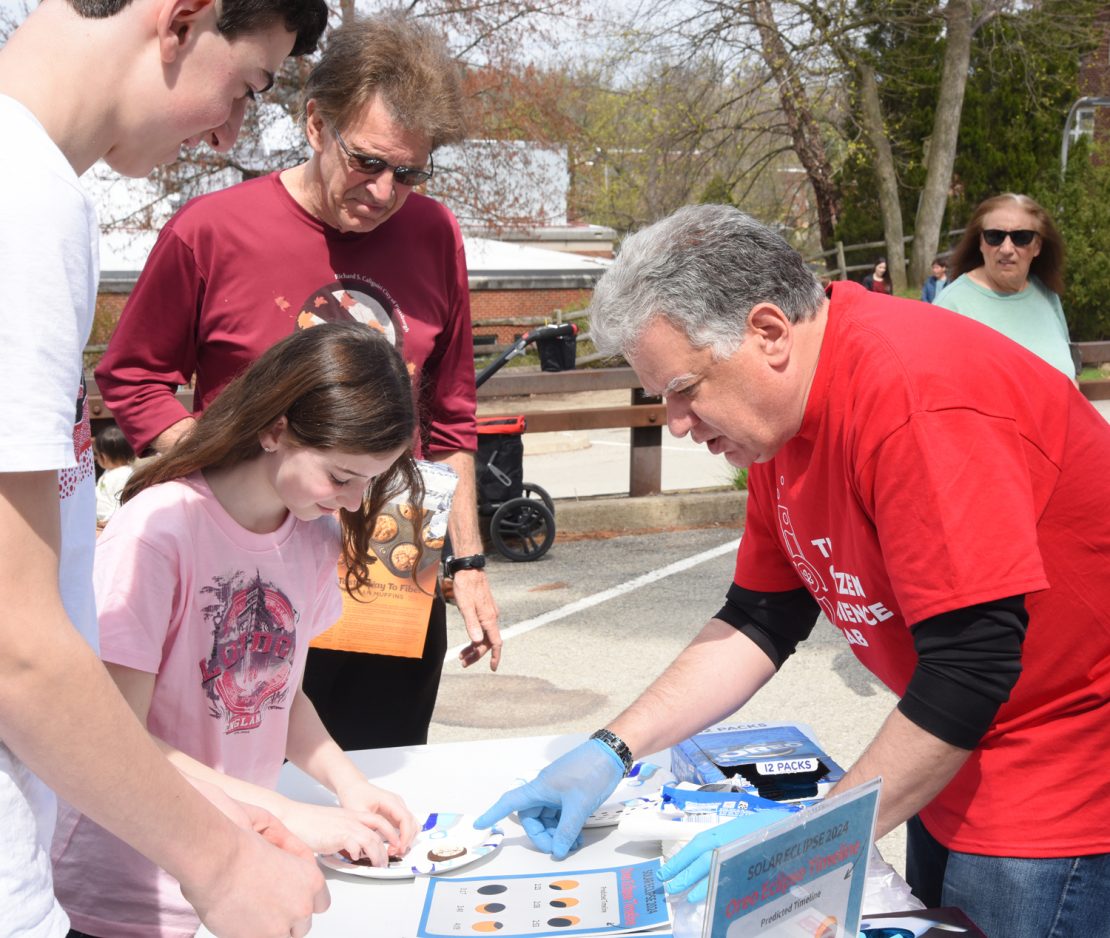
Participants used Oreo cookies to follow the phases of the eclipse. They created pinhole and box projectors to view the event without safety glasses. They constructed spectroscopes that split the sunlight into a rainbow. They also enjoyed launching dry ice rockets.
“The event went great,” said Nicole Saltzman from the Science Lab. “We had a huge turnout. This was more people than I could ever expect. It was a really cool thing to share with the community and to be able to share our expertise, our glasses and our experiments and activities with the community.
“An eclipse is a big, big thing in the science community. Anyone in the whole world can enjoy and take part in the fun science of it and experience it. See it occur and see what it does to everything around us,” she added.
Saltzman was over the moon after witnessing the eclipse. When the celestial event occurred in 2017, she was a student at Thomas Jefferson High School. “I never got my hands on a pair of glasses to experience it,” she said regrettably, “but I did get to view it this time. It was awesome.
“It blew my expectations. You know what to expect but just seeing it through your own eyes is very different. Very, very cool experience,” she added.
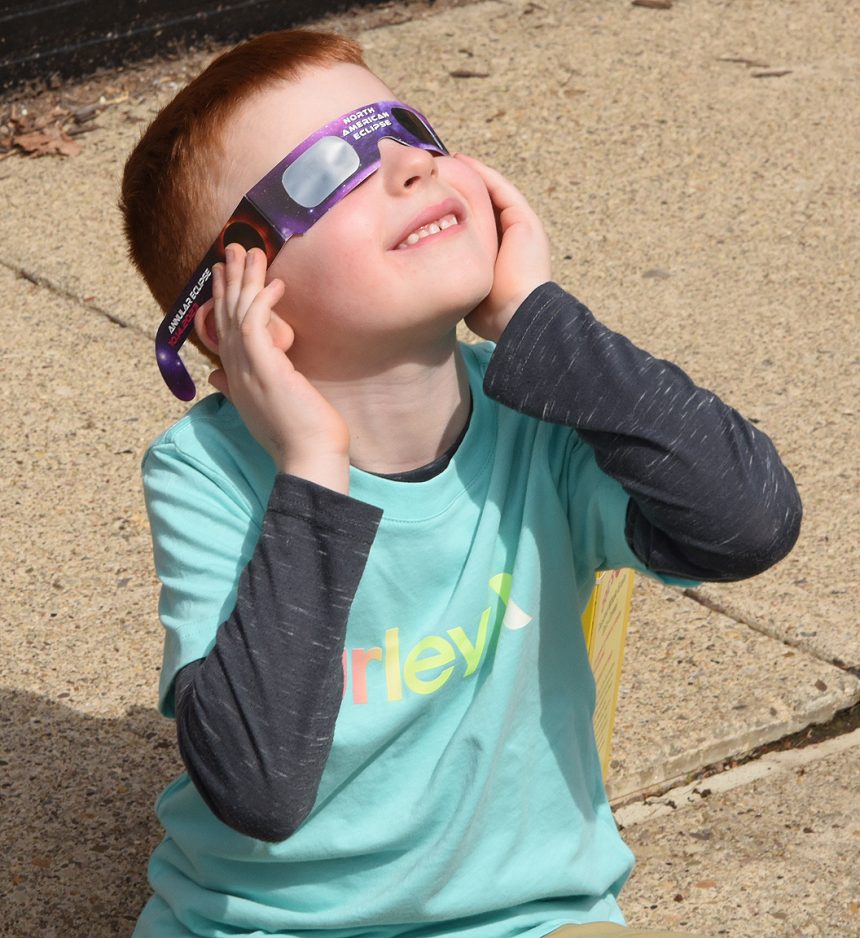
Jonathan Menzietti agreed. After experimenting with the rockets that he didn’t expect to fly into the air, Menzietti settled into his prime viewing spot, a curb along the sidewalk of the library, and donned his eclipse glasses.
“It’s a crescent sun,” he squealed in delight. “It looks good.”
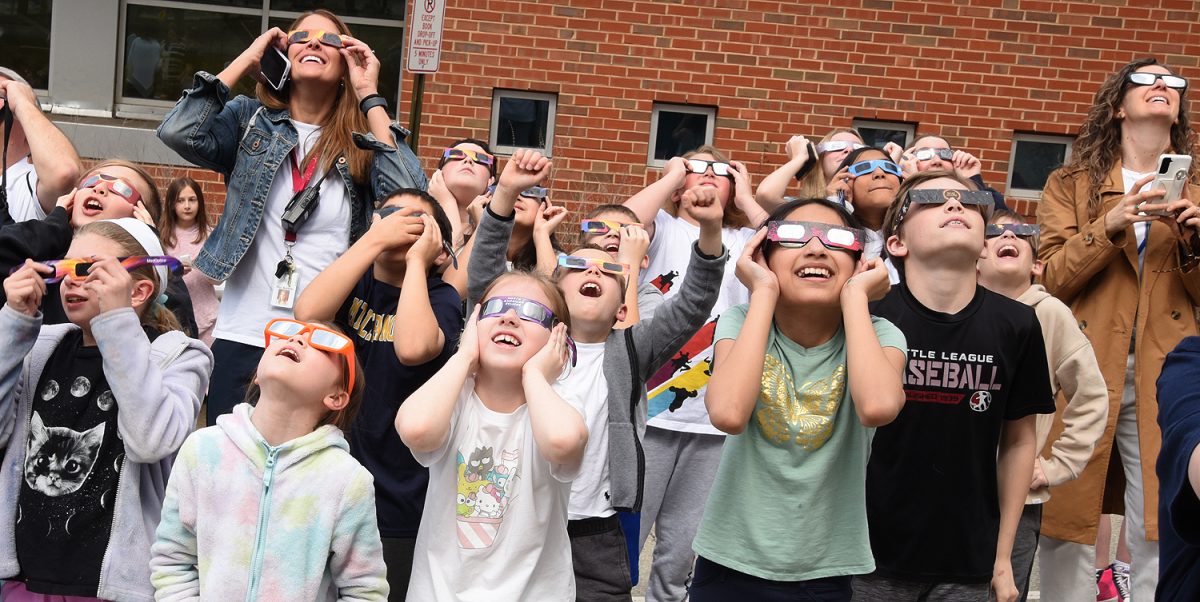
Washington Elementary School students were equally excited. When the sun streamed through the windows of Kim Robbins’ fourth-grade classroom, she donned her eclipse glasses and the students erupted in cheers. “They became very excited,” she said.
Until the classes walked over to the library and gathered for the viewing party, they tracked the progression of the eclipse by watching the NASA live stream that Robbins had downloaded to her cellphone. “When it hit Mexico at 2:07, the kids were saying, ‘it will be here by 3:17,’ but we think how quickly that is but it’s a very far way to travel.”
As an educator, Robbins welcomed the opportunity that the students had to learn firsthand about the phenomena that will only be visible again in Montana and the Dakotas on Aug. 22, 2044.
“Depending on where they live in life, this may be the only total eclipse of the sun they experience. So I think it’s important when we have this opportunity, they get to experience this and share it. Hopefully they will remember this forever.”
Kristen Mackey, who is a fourth-grade reading specialist at Washington Elementary, prepared her students for the eclipse by showing them pictures and videos of the event. The class also read articles about eclipse.
“When the moon goes in front of the sun at just the right position to cover the sun, it’s a unique occurrence. A very exciting opportunity to experience,” she said. “We certainly were in a good spot to witness 97% coverage.”
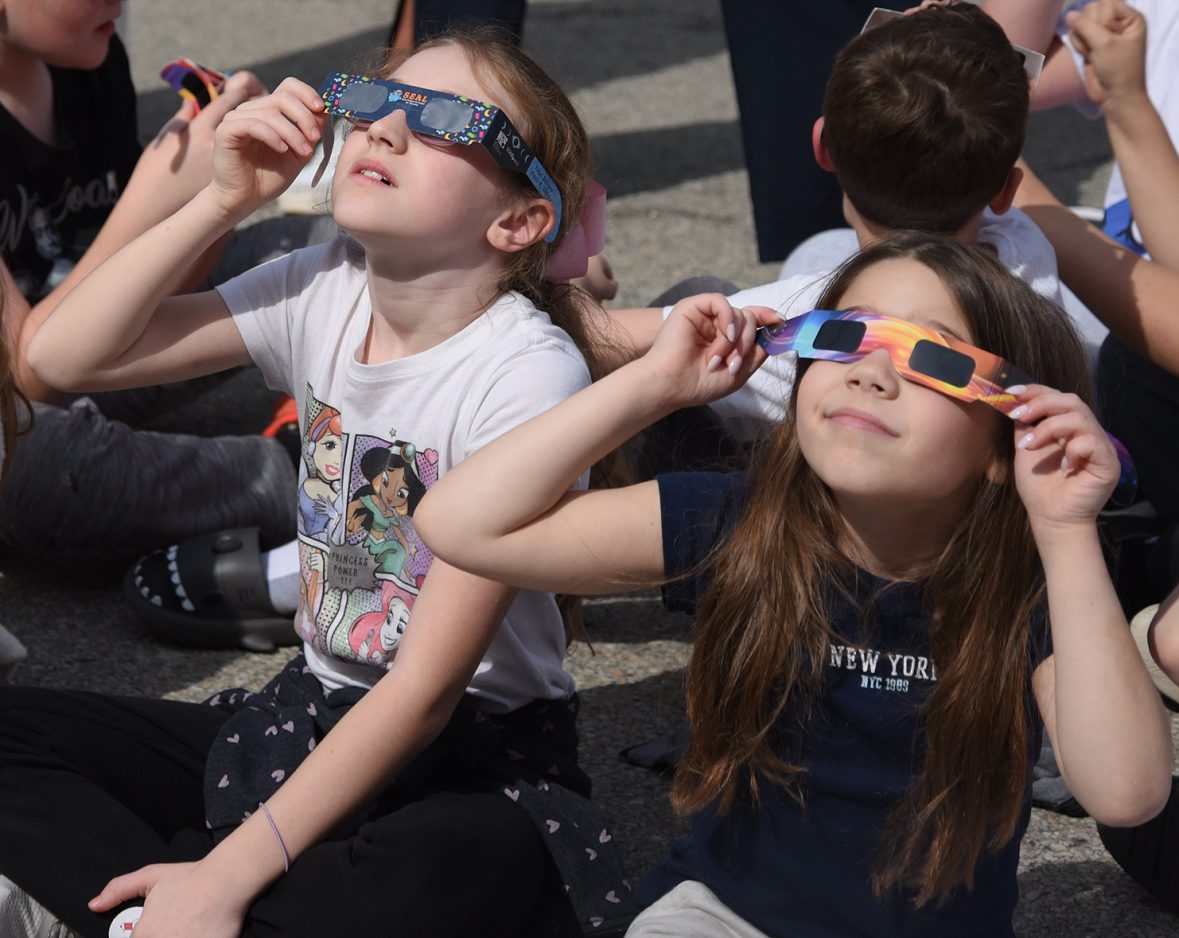
As totality neared, the library parking lot darkened as if dusk and temperatures dipped noticeably, to the delight of Ellie Ohsie. The 8-year-old Markham Elementary School student attended the solar eclipse watch party with her mother, Erin.
“I was really looking forward to it getting really dark and really cold because I am really hot,” Ellie said.
“I was excited to experience this with her,” said Erin. “I feel like it’s such a fun age for us to bond and experience such an historic event together. For whatever reason, I was more excited about this because I had read more about it and it feels nice to be part of a community to experience this with,” she added.
Nora and Julie Bushman, like the Ohsie family, spent their mother-daughter day together embracing all things eclipse.
“I saw the rainbow,” Nora said as she peered into her spectroscope. “I have a book at home and learned all about how the moon blocks the sun. It was so cool.”
Julie added that the highlight of the event for her was “just getting to enjoy the nice weather and spending time” with her daughter.
Though Mayra Khanna expected the eclipse to darken the region more, she was not disappointed in her view of the eclipse.
“It was pretty much what I expected,” Khanna said. “It was my first time experiencing an eclipse, so I was really excited about it. Really, really cool,” she added. “A once-in-a-lifetime event.”