

CMU students, Google help South Fayette improve tech curriculum
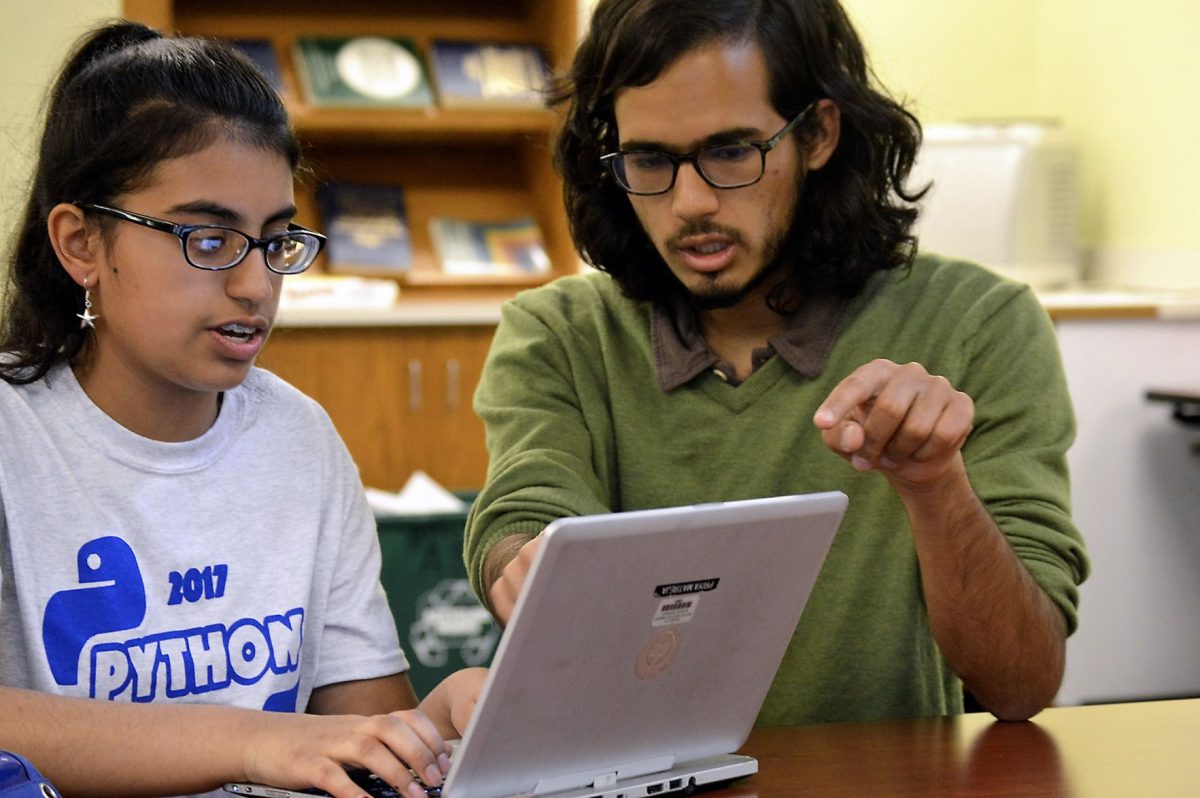
Amal Nanavati, a Carnegie Mellon University student, helps a South Fayette student learn Python programming.
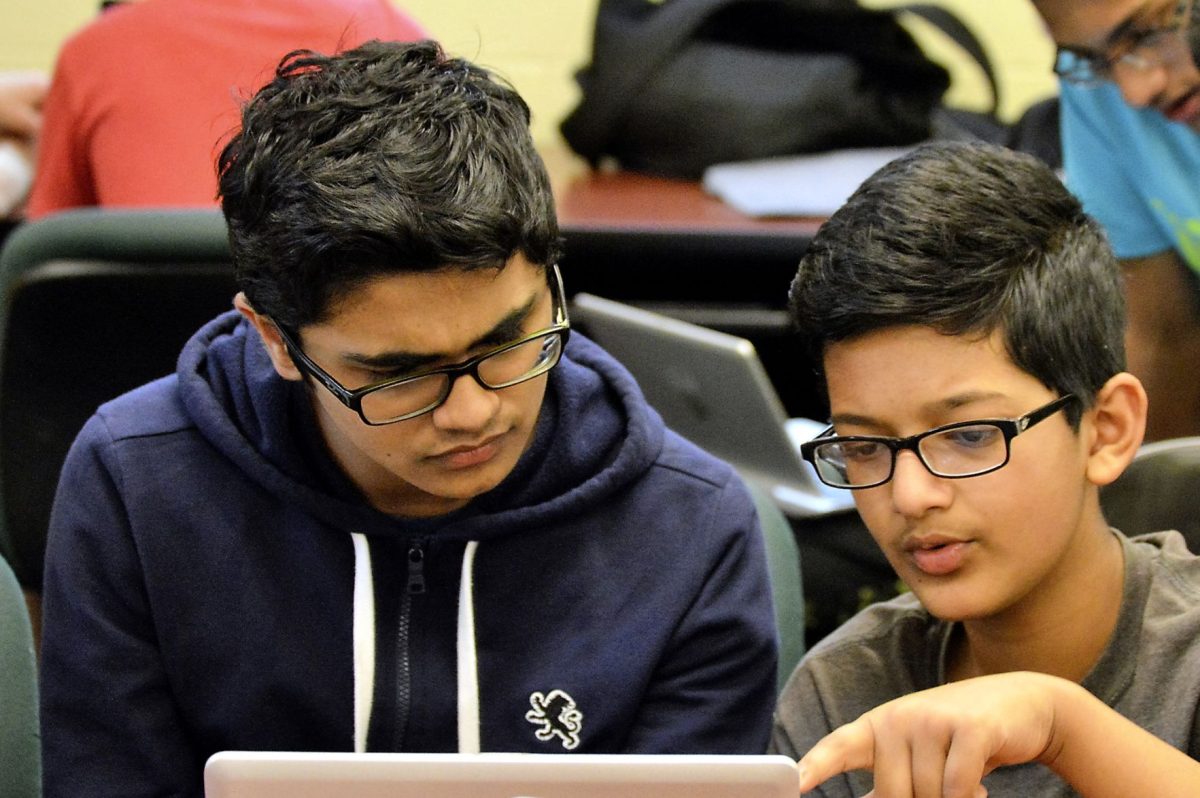
Vinay Pedapati (left) helps one of his peers better understand coding.
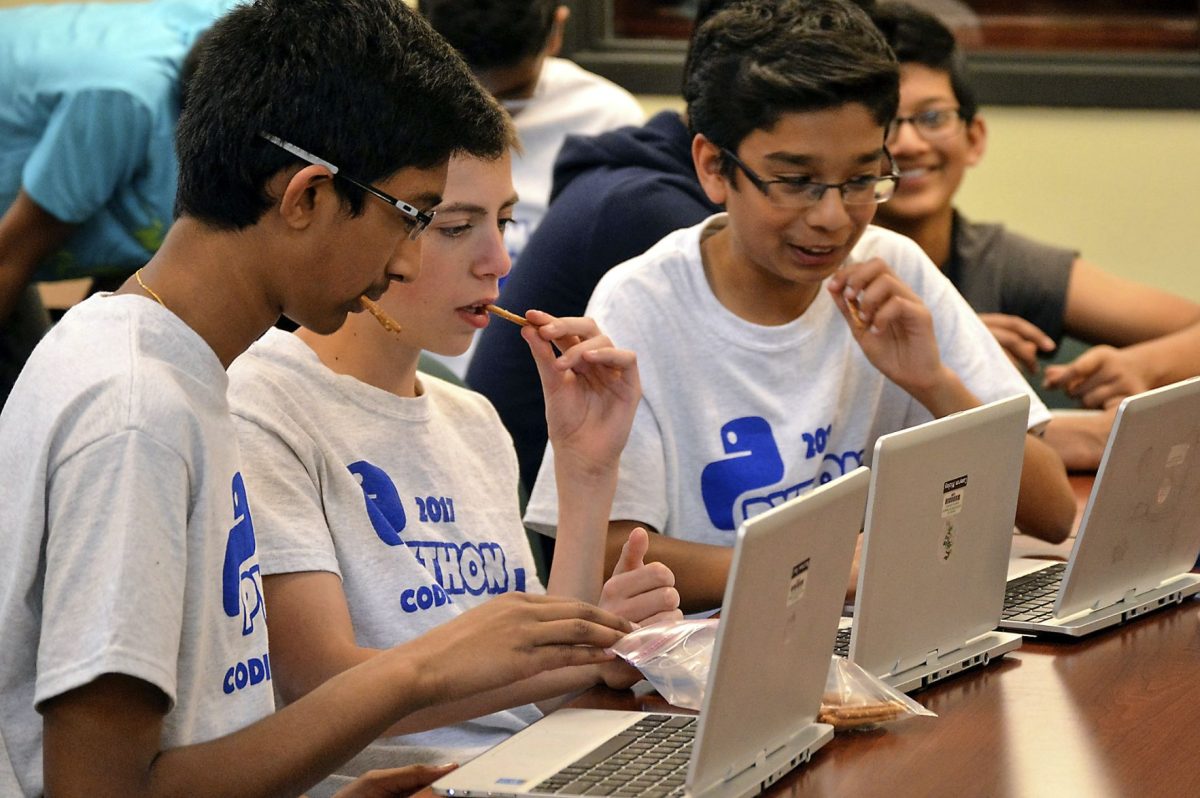
South Fayette students stay after school to learn about Python programming, which plans to be instituted into the eighth-grade curriculum.
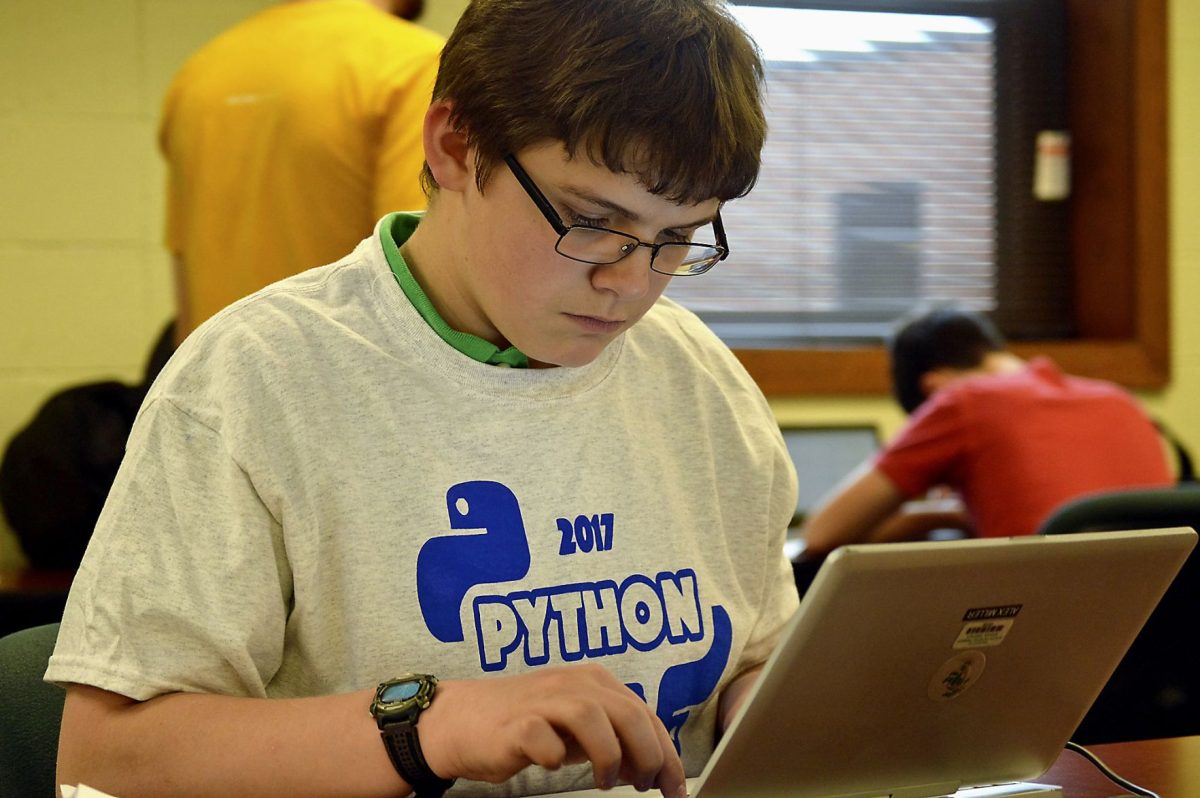
The inclusion of Python into the South Fayette curriculum will ease the transition for coding from eighth grade to the high school.
A question Aileen Owens has grown accustomed to answering is ‘How did this happen?’
It’s a question that refers to how the South Fayette School District climbed the charts as a destination for parents – not only those in the area or state, but the entire country – as a sought after spot for those seeking the best education for their children.
To further its initiative of “vertically aligned computational thinking,” the district, along with students from Carnegie Mellon University and a developer from Google Pittsburgh, have launched an incubator program to offer Python programming language to all eighth-grade students beginning next year.
The incubator is an afterschool program brought to the middle school with students from Tecknowledge, an outreach team that supports students in their acquisition of quality computer science and technology education, to help teach Python to students and district teachers.
“When we started investigating our kindergarten through grade 12 program, we realized that we are doing a very good job teaching students in grades K-8 with block-based codes, sensors and robotics,” Owens said. “There has to be a better transition to the high school where we teach Java. Python is a quick language, it has very strong, deep libraries and it can be useful in the tech industry. That’s why we chose it for our students.”
The eight-week program also consists of bringing in a computer science consultant to observe the incubator and evaluate its effectiveness on students and teachers learning the programming language.
“Python is a great stepping stone to learn more languages like Java,” said Parv Shrivastava, a ninth-grader at South Fayette who also serves as a teaching assistant for the program. “It really cultivates students into the field of technology and gets them to experience what text-based coding is like. It’s the bridge to other coding languages.”
It can be used for web and internet development, database access, desktop GUIs, education, network programming and software and gaming development. More importantly, it will make an easier transition for eighth grade students when they enter the high school.
“It’s a very simple programming language and a great way to start line coding,” said South Fayette 10th grader Vinay Pedapati.
Pedapati and Shrivastava’s interests in coding both began with their parents and was only fueled by the early experience adopted into curriculum as early as kindergarten in the district.
“This is something I never would have been involved with even at this age,” said CMU student Michael Wagner. “When I was in eighth grade programming was the last thing on my mind. Maybe if there were opportunities like this I would’ve gotten involved earlier. It’s amazing that we are able to provide this opportunity to pursue this type of learning.”
The incubator goes through the curriculum step-by-step and represents what a typical class would resemble. It will be evaluated and tweaked once again before another beta test in the summer with a different group of student with the intent of rolling it out in the fall 2017, eighth grade curriculum.
“We are one of the first districts in the country to create a vertically-aligned, computational-thinking initiative,” Owens simply says as an response to that widely-asked question. “The answer is because we’ve changed traditional education and transformed it to create innovative leaders. This right here is how we do it.”