

Tartan Day preserves Scottish heritage
Eleanor Bailey/The Almanac
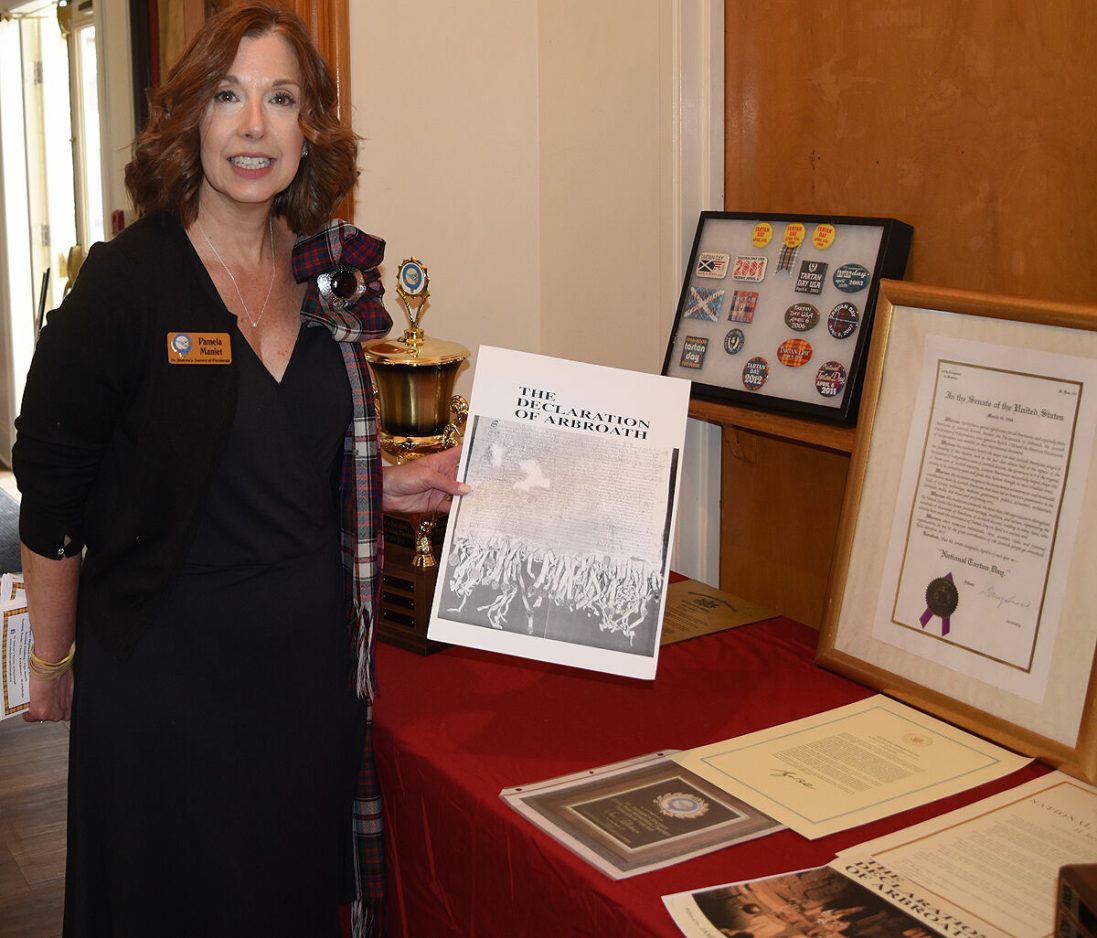
Tartan Day chairperson Pam Maniet holds up a copy of the Declaration of Arbroath, which asserted Scotland’s sovereignty over its lands. On April 6, 1320, the document also proclaimed independence from England.
Eleanor Bailey/The Almanac
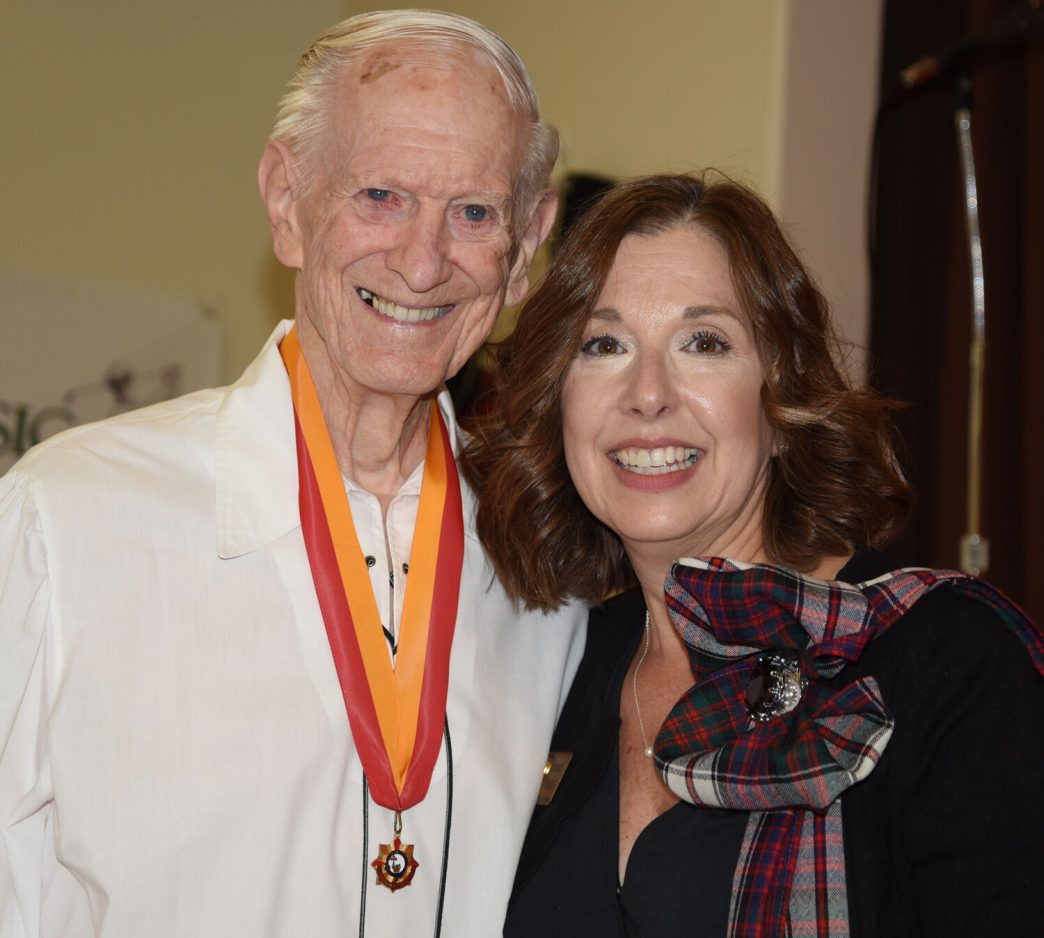
Robert Murdoch is shown with Pam Maniet. Murdoch, who helped get Tartan Day established through a Senate proclamation signed by President George Bush 25 years ago, served as the chairperson for the annual Tartan Day celebration, hosted by the St. Andrew’s Society of Pittsburgh. Maniet assumed the duties when Murdoch retired from the position.
Eleanor Bailey/The Almanac
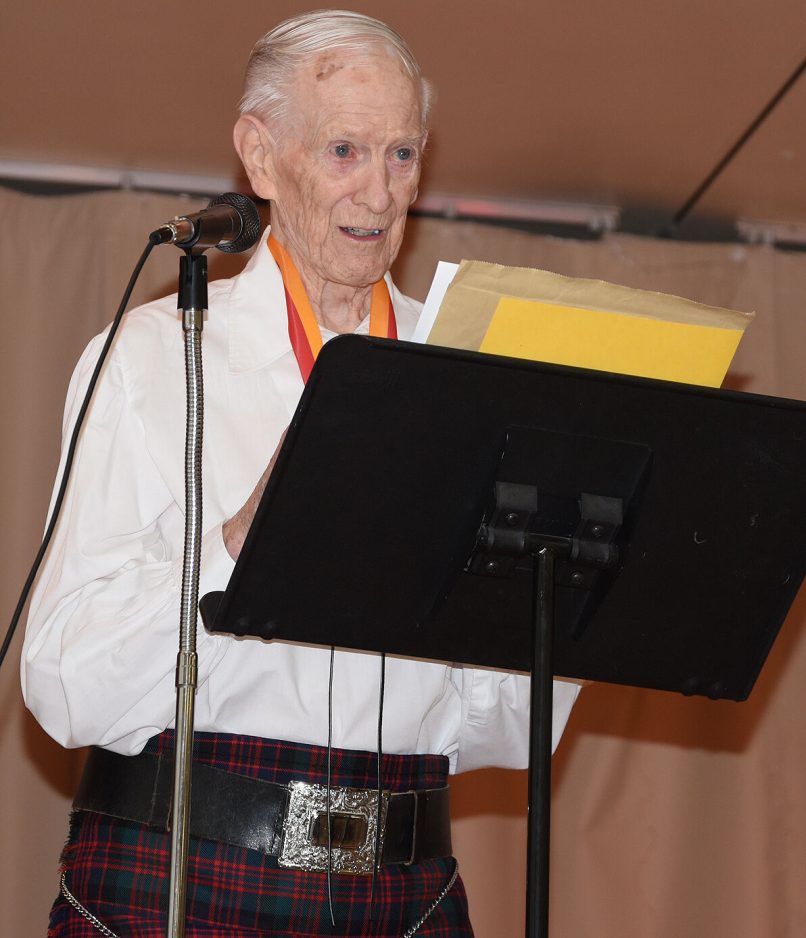
Robert Murdoch addresses the audience at the start of Tartan Day festivities.

Eleanor Bailey/The Almanac
Jim Harland shows the chanter and the pipes a Scotsman would carry into battle as a member of the 42nd Highland Regiment. The braiding on his red coat indicate the rank of the pipers, who carried status in the army.
Photos: Eleanor Bailey/The Almanac
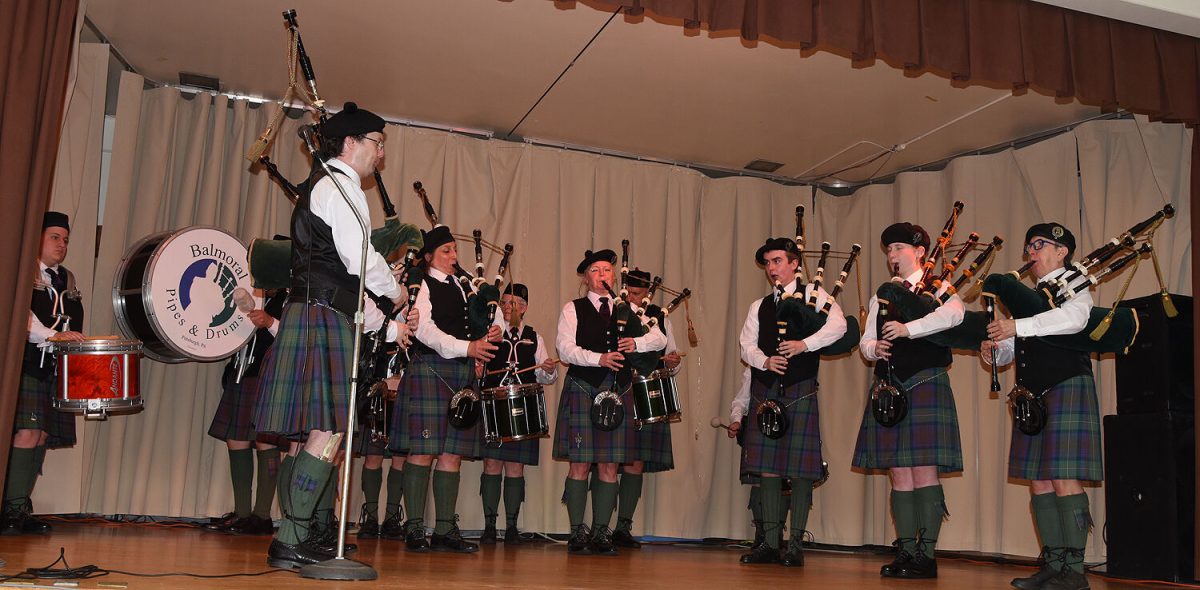
Balmoral Pipes & Drums group was among the entertainers during Tartan Day. Visit www.bagpipe.org to learn of summer camps being held in July.
Eleanor Bailey/The Almanac
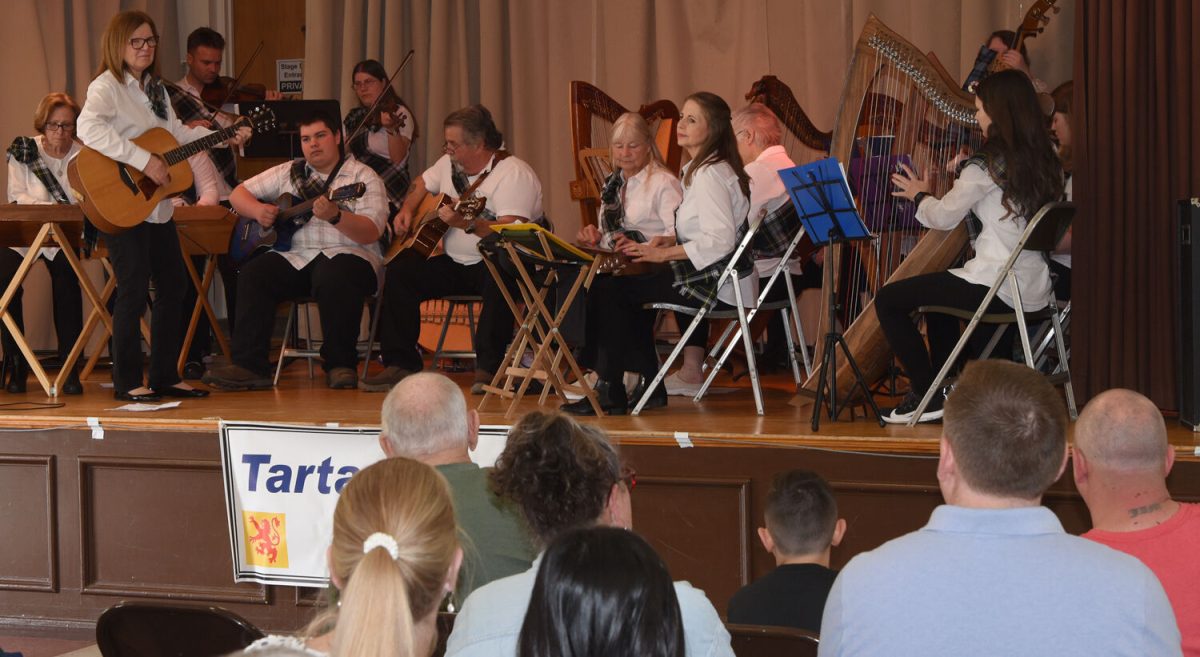
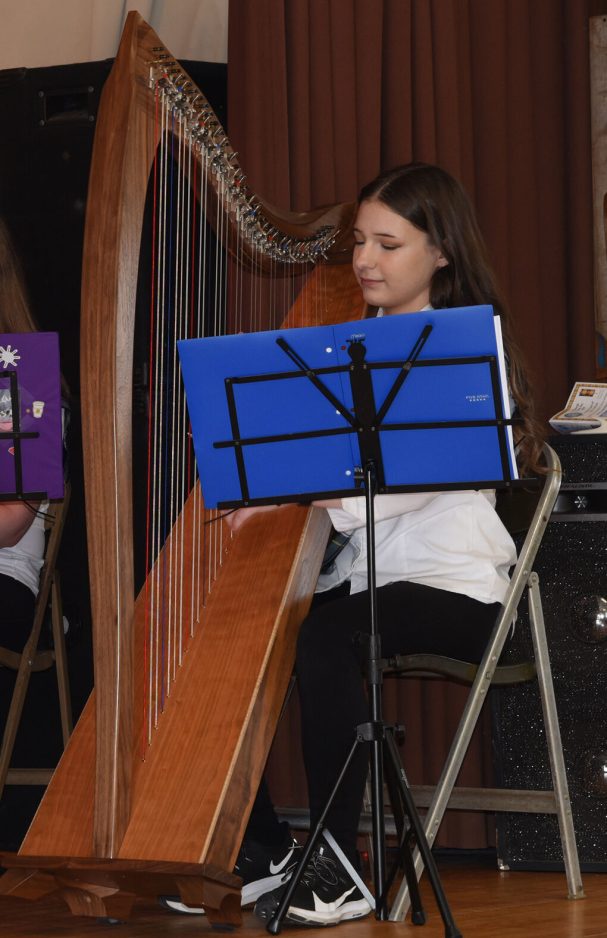
The Ringgold Harp and String Ensemble, directed by Melanie Sandrock on guitar, performs Scottish music for the audience in attendance at Tartan Day festivities.
Eleanor Bailey/The Almanac
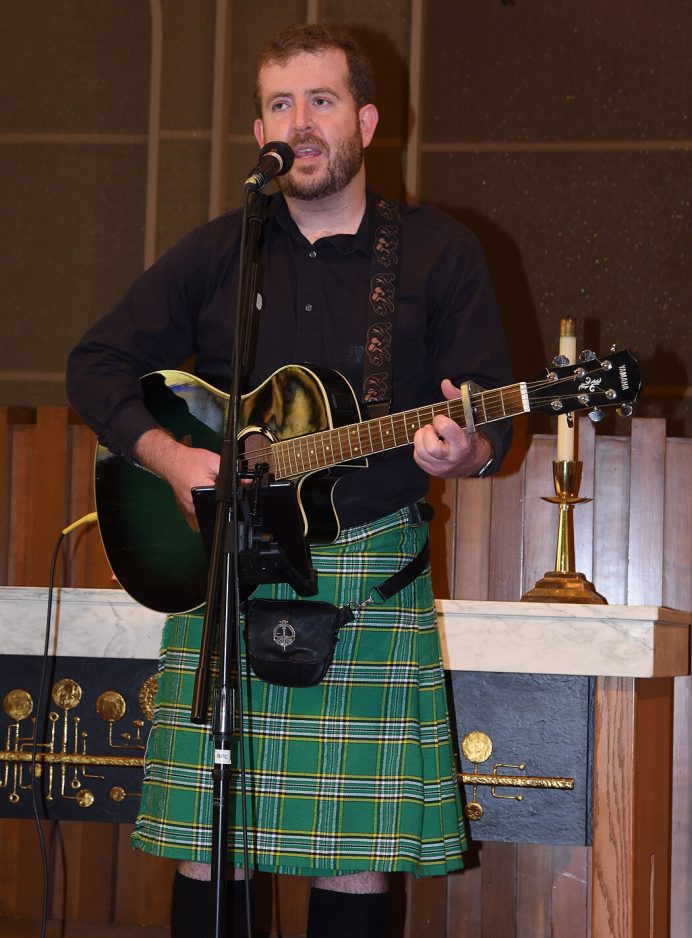
Mike Flaherty performs Celtic ballads for the audience during Tartan Day festivities. When the South Park graduate is not singing, he can be seen on stage as an actor.

Eleanor Bailey/The Almanac
Stormy Brasuk demonstrated needle felting at Tartan Day. The Hopwood resident makes dolls and toys for children, using the Scottish technique. She is pictured with her husband, John, who helps makes the craft kits that come will full instructions.

By Eleanor Bailey/The Almanac
Members of the Pittsburgh Scottish Country Dancers performed steps from which square dancing and contra dancing grew. In addition to this group, Tartan Day featured the talents of the Celtic Spirit Highland Dancers and Pipers of Pittsburgh as well as the West Virginia Highland Dancers.
Eleanor Bailey/The Almanac
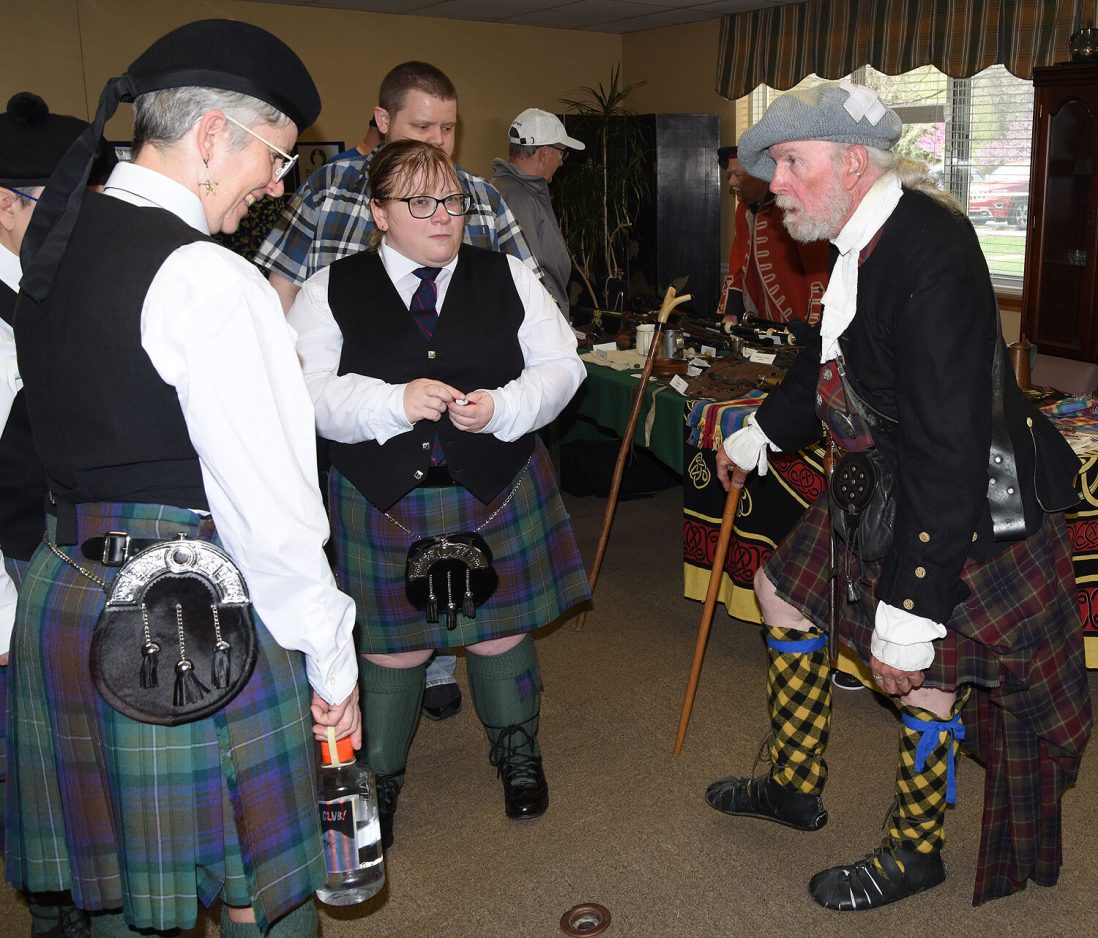
Jim Roberts talks about some of the Scottish battles and traditions to an attentive audience, clad in kilts indicating their clans.
Eleanor Bailey/The Almanac
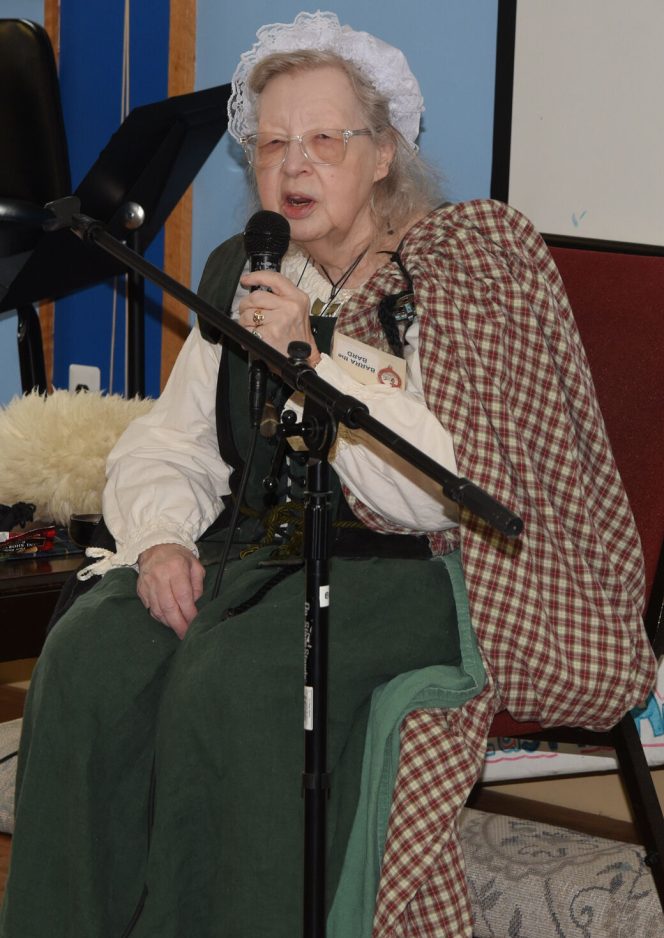
Barra the Bard spun Scottish folklore and tales during Tartan Day.
Eleanor Bailey/The Almanac
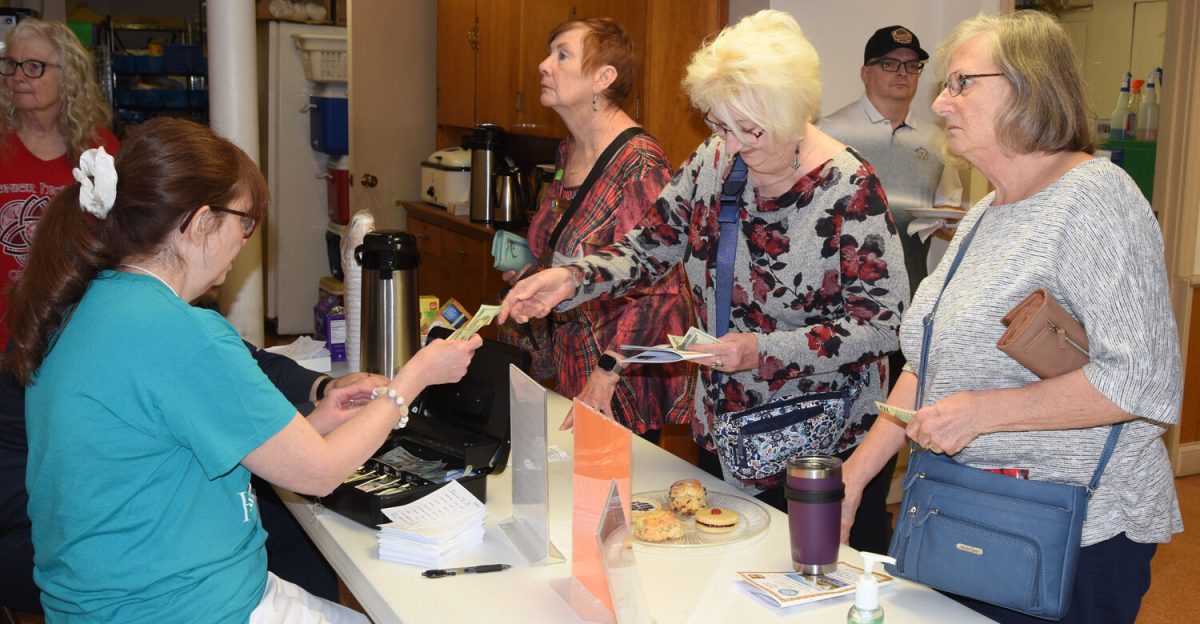
Hungry patrons lined up to purchase Scottish food fare, from meat and shepherd’s pies along with biscuits, scones and Fern cakes.
Eleanor Bailey/The Almanac
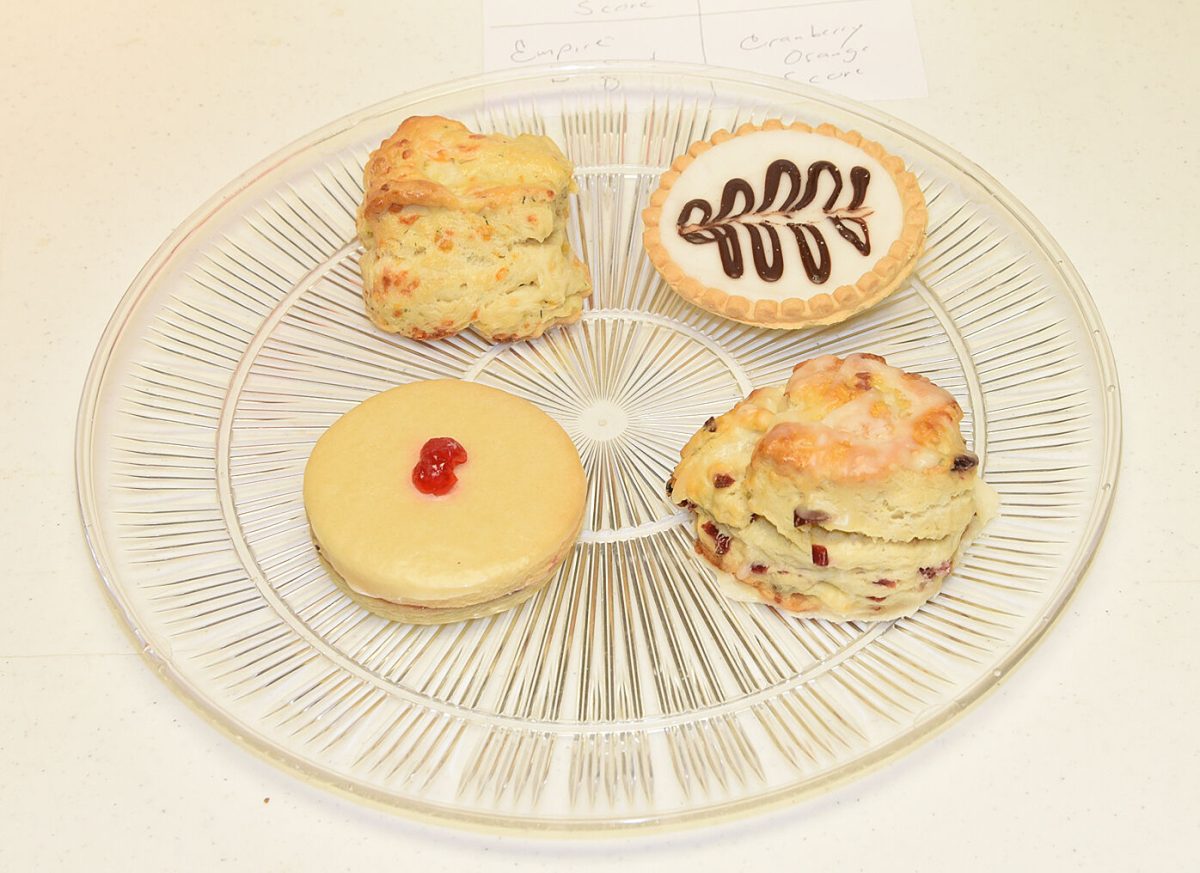
Fern cakes, biscuits and scones were among the food fare available for purchase at Tartan Day.
Eleanor Bailey/The Almanac
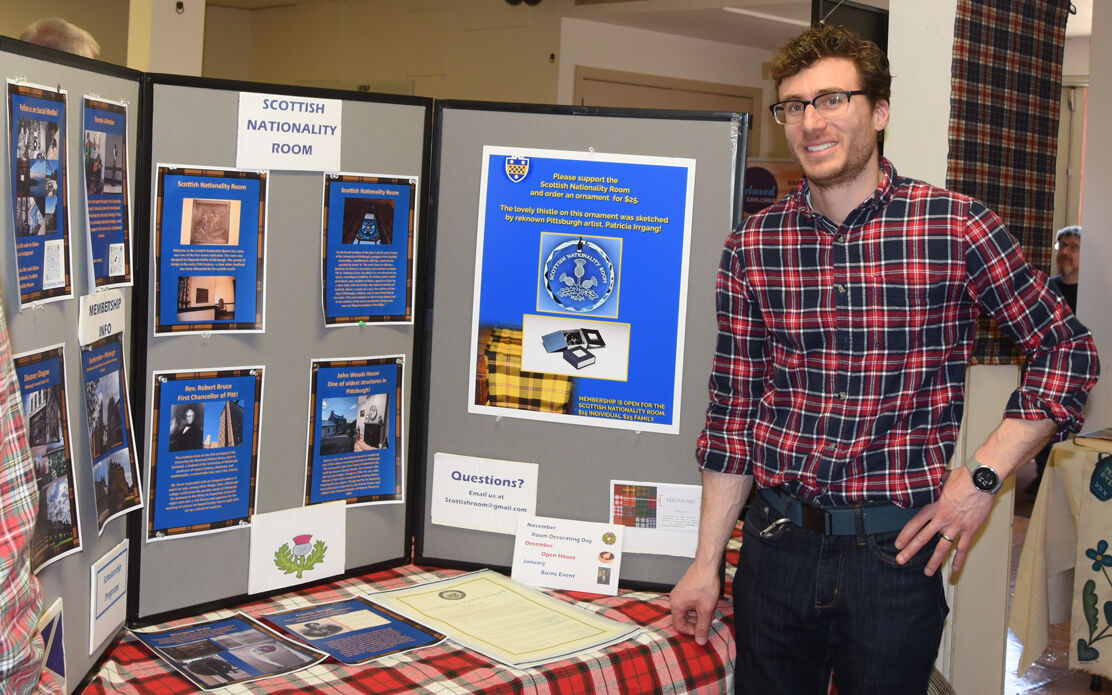
Bill McShane manned an informational display about the Scottish Nationality Room, which is housed on the first floor of the Cathedral of Learning on the University of Pittsburgh campus.
Eleanor Bailey/The Almanac
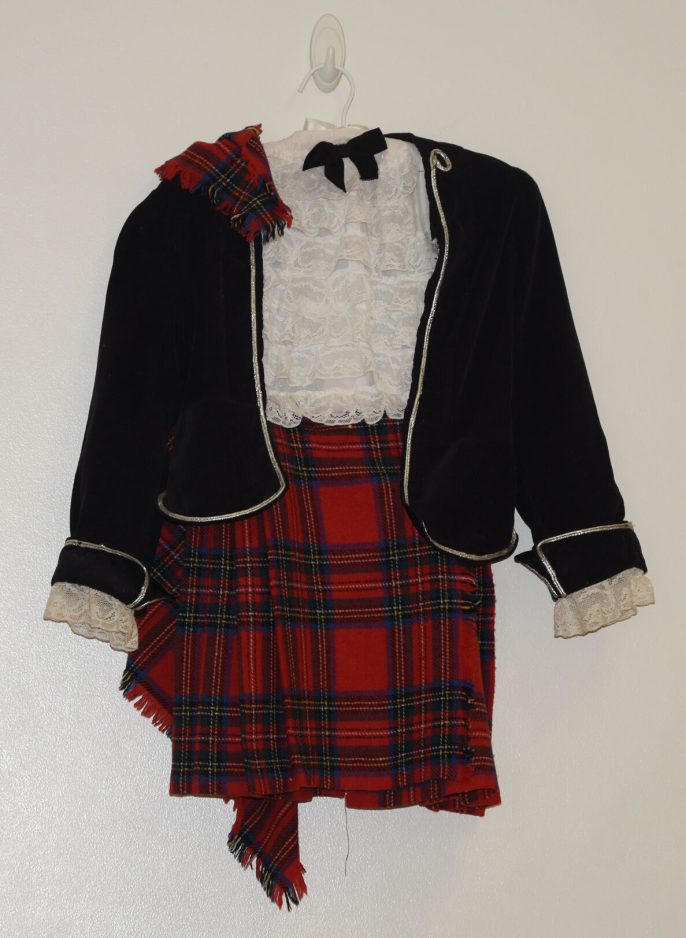
One of the many kilts on display during Tartan Day
Eleanor Bailey/The Almanac
The harp, fiddle and bagpipes are among the musical instruments associated with the Scottish.

Eleanor Bailey/The Almanac
Jim Roberts discusses swordsmanship with a visitor to the exhibit room at Tartan Day.
Andrew Carnegie and Gen. John Forbes may be the most famous Scotsmen from the Pittsburgh region, but Robert Murdoch, 86, of Whitehall has probably done the most to preserve and promote the Highland heritage here and across the nation.
The 86-year-old Whitehall resident was the featured guest at the 25th anniversary celebration of Tartan Day, which is recognized nationally on April 6 to commemorate Scotland’s independence from England. Murdoch opened the annual festivities, hosted by the St. Andrew’s Society of Pittsburgh and held locally on April 15 at Bethel Presbyterian Church.
“We are thrilled to celebrate the 25th anniversary and to have Bob here,” said Pam Maniet in her opening remarks. She has chaired Tartan Day since Murdoch stepped away from those duties in 2012. “He was the original person to run this before the baton was passed to me. My only hope is that I live up to his example.”
Murdoch indeed has lived an exemplary life.
Though he was born in America, his parents, Tom Murdoch and Julia Whitten, emigrated from Scotland to the United States in 1921. He worked in the steel mills in Aliquippa before moving to Homestead to work in a bank. Because his mother was a pianist and his father was a vocalist, who became known as the Pittsburgh Scottish Tenor by 1925, the young Murdoch gravitated to music. He eventually earned his own title as the Tartan Tenor.
Thanks to Duncan Bruce, a Pittsburgh native who helped head up the St. Andrew Society, New York’s oldest charity, he embarked on a three-year tour. He performed for audiences of 600 to 800 people nightly at the Waldorf-Astoria Hotel as well as the city’s renowned Italian amphitheater. He also produced a CD, titled “Ae Fond Kiss,” and including 24 of his finest Scottish tunes. One of the CDs is on display at the University of Pittsburgh’s Nationality Rooms in the Cathedral of Learning.
“Ae Fond Kiss” was a well-known song to which Robert Burns poem was used,” explained Murdoch. “It was the song that I most frequently used when I did solos. When Duncan called me to sing, I didn’t know what I was getting into, but I really enjoyed it.”
Murdoch relished the education he gained that led him to his career as a lawyer. A member of the University of Pittsburgh’s varsity letter club, having excelled at soccer for the Panthers, he earned a Bachelor of Arts and Science degree in sociology in 1960. He attended law school at Duquesne University for two years.
“I became a lawyer the way Abe Lincoln did,” he mused.
After petitioning the state’s Supreme Court, he completed his legal training by reading law for three years with Attorney Thomas Lewis Jones. He took the bar exam and passed. He has worked for four different law firms for 55 years. His career included one successful argument before the United States Supreme Court, a federal longshoremen case some four years ago.
Murdoch used his oratory and argument skills to crusade for Tartan Day. He was instrumental in getting Resolution 155 passed in the U.S. Senate. Signed by George Bush on March 20, 1998, the decree declared April 6 as National Tartan Day.
A charter member of St. Andrew’s Society of Pittsburgh since 1990, Murdoch went on to serve as the national chairman for Tartan Day. Currently, he is Chairman Emeritus for National Tartan Day.
“Just to see the response of how Tartan Day has made a difference in people’s lives is a highlight for me. I appreciate when a person comes up to me and says that they work in an office where there are no Scotsman but they put items on their desks now to celebrate. There are so many celebrations throughout the country but to get this passed and the word out is the top of the tree for me,” Murdoch said.
“It’s so much more than eating food, singing and dancing, it’s about keeping the traditions and our heritage alive.”
Murdoch acknowledged the recent festivities held locally. “Programs like these are tremendous.”
Tartan Day in Bethel Park included a display of artifacts and trophies from the Highland Games, giving to the best fiddler and harper of the day. Among the documents were a copy of the Tartan Day proclamation as well as the Declaration of Arbroath signed in 1320 by eight earls and 45 barons proclaiming Scotland’s sovereignty over its lands and independence from Great Britain.
“This is why we celebrate. It’s a special day,” said Maniet. “We are thrilled to see all these lovely people here, many of whom have helped me throughout the years, having fun and celebrating our heritage.”
The day’s events included performances from several pipe and drum bands, the Ringgold Harp and String Ensemble as well the Pittsburgh Scottish Country Dancers, Celtic Spirit Highland Dancers and the West Virginia Highland Dancers.
Sandra (Macintyre) Staas enjoyed those performances. A Glasgow native who arrived in the United States in 1980, she was attending her first Tartan Day.
“It’s terrible. I should have been attending this before but I didn’t know about it until I saw it advertised. I follow on Facebook and the country dances is what I wanted to see. I want to learn these dances,” she said.
Sean Patrick Regan instructed beginners to the bagpipes. Barra the Bard spun folk tales. Paul Thompson provided a slideshow that exposed the beauty of the island of Scotland as well as the beguiling and quirky aspects of the communities. Allison McKnight and George White Bouzouki were a new program addition for 2023.
“Allison’s a triple threat,” Maniet said. “She sings, fiddles and does the country dances. George accompanies her on a special drum from Scotland. They are fabulous.”
This year’s Kilt Demonstration was a highlight. The segment showed how ladies used kilts to dress. In addition, South Park native Mike Flaherty, RichPatrick, Road to the Isles and Pint and a Half performed Celtic music.
There were plenty of wares to purchase as well as food, including scones, meat, shepherds and Haggis pies, and biscuits, to consume.
“Tartan Day is much more than people running around doing dances, playing the bag pipes and eating food, although that is popular,” said Fiona McGrath of Green Tree. “St. Andrew’s Society does a great job of showing people, who may only have a little bit of knowledge of Scotland, another way to learn about their history and heritage.”
Leslie Clark agreed. A member of the Balmoral Pipe and Drums since 1995, the associate director said, “I love that this happens. There is so much information that comes from clans, the organizers, the performances, the workshops. It’s a great event and I am glad that the St. Andrew’s Society coordinates it.”
Jim Harland of Squirrel Hill embraces Tartan Day. It’s his opportunity to expound on the history of the bagpipes as well as the St. Andrew’s Society of Pittsburgh, which hosts the annual event held in early April at the Bethel Presbyterian Church.
“I’m almost a founding member,” he said proudly. “What started out as a drinking club at Froggy’s downtown has progressed into quite a nice event that promotes everything Scottish as well as preserves and promotes the culture and the heritage.”
As a re-enactor with the 42nd Highland Regiment, Harland has passed along his knowledge of the bagpipes. He has played them for 45 years.
“My mother didn’t like them so I had to learn once I was out of the house,” he said with a laugh.
In a more serious tone he added, “It’s just amazing what pipers meant to the a regiment but also to Scotland.”
In the McMillan Exhibition Room of the church, Harland exhibited weapons and an array of equipment used on a daily basis by pipers.
He said the musicians did not carry a musket. Sometimes they carried a broad sword, but they usually carried a pistol. He had on display a 1750s Murdoch steel pistol. They carried no bayonet and their back pack and footlocker traveled with the officer’s train. They had a haversack that carried three days or rations. In addition to carrying their pipes, they toted a chanter, that could play nine notes through the holes chiseled on the melody pipe
“We carried the pipes so you didn’t want anything interfering with playing the pipes,” he said.
“Being a piper had an elevated status,” he added. “They were more integrated in the social life and fabric of Scottish life. They were not so much warriors.”
Harland said that clan lairds typically brought their own pipers and they were paid an extra shilling a day more than a regular officer. Their status was noted by the scarlet red coat they wore. The jacket was adorned with a knot that distinguished rank.
“Pipers usually were considered non-combatants but they were part of the culture.”
In the Army, Harland said, pipers played duty tunes, led troops out to forage, played for officer’s mess as well as assembly. At the end of the day, they usually were given a cup of rum as part of their pay because the money trains did not always kept up with the units.
“Officers checked you off. You consumed your dram by toasting the King on down and you were not allowed to leave until you finished. The rum was considered a record of your pay, and just like the Navy and its grog, it prevented desertion.”
“Pipers really did have status,” Harland said. “There were a lot of different things that translated to our duties.”
According to Harland, these could also include playing at weddings, funerals, parties and dances.
Today, Harland participates in reenactments of the battle at Bushy Run and during Fort Ligonier Days.
“I really enjoy re-enacting,” he said. “It’s great.”
Harland added that Tartan Day is especially important for the Scottish community as it advocates for its heritage and raising money for scholarships for bag pipe camps, harp and string clinics as well as dancing lessons and other native activities.
“This is basically a clearing house for Scottish events and all things Scottish,” he said. “It has really grown and it’s important for getting the young people involved.”
Tartan Day featured many musical groups and several pipe bands. Among them were the Balmoral Pipes and Drums and the MacDonald Pipe Band and
More information regarding these organizations can be found at: balmoralschoolofpiping.org or macdonaldpipeband.net. Sean Patrick Reagan also demonstrated bag pipes for beginners.